Last reviewed: September 2026 · By the HVAC Brief Editorial Team · Our sourcing and editorial standards
A heat pump heats by moving heat rather than making it, which is why it can deliver more heat energy than the electrical energy it consumes. A furnace can never exceed 100% of the fuel energy it burns; a heat pump routinely exceeds 100% of its electrical input because it is transporting, not generating.
There is heat in outdoor air even in winter. A heat pump extracts it, concentrates it by compression, and releases it indoors. Running the cycle in reverse gives you air conditioning.
Why moving heat beats making it
Combustion converts fuel to heat, and the ceiling is the fuel’s energy content. A 95% AFUE furnace delivers 95% of it. A heat pump is not converting anything: it uses electricity to run a compressor that relocates heat that already exists outdoors.
That is why heat pump efficiency is expressed as HSPF2 rather than as a percentage. The measure describes heat delivered per unit of electricity across a heating season, and the ratio is greater than one.
The cycle, in heating mode
- Outdoor coil absorbs heat. Refrigerant colder than the outdoor air takes heat from it and evaporates.
- Compressor concentrates it. Raising pressure raises temperature, so the vapour becomes hot enough to be useful indoors.
- Indoor coil releases heat. The hot vapour condenses, giving its heat to indoor air.
- Metering device drops the pressure and the refrigerant returns to the outdoor coil cold enough to absorb heat again.
- A reversing valve swaps the roles of the two coils, which is how the same machine provides cooling.
Why performance falls as it gets colder
| Condition | What happens |
|---|---|
| Mild outdoor temperature | Plenty of heat available outdoors, cycle runs efficiently |
| Colder outdoor temperature | Less heat available per unit of air, compressor works harder for less output |
| Below the balance point | Heat pump output no longer meets the house load, supplementary heat engages |
| Frost on the outdoor coil | Defrost cycle runs, briefly reversing to clear ice |
The balance point is where the heat pump’s declining output crosses the house’s rising demand. Below it, supplementary heat makes up the difference, which is usually electric resistance and much less efficient. That is why cold-climate performance depends on the equipment and the house rather than on the technology alone.
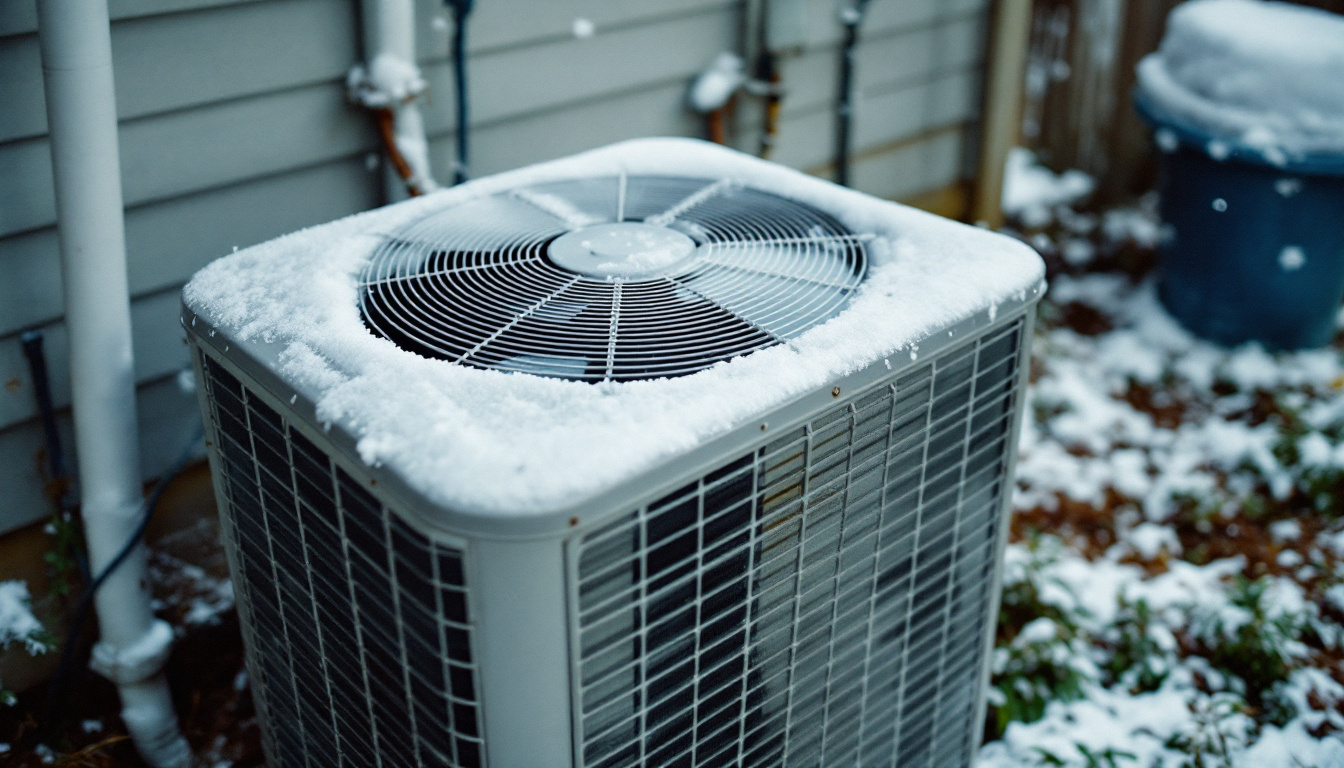
A heat pump that briefly blows cool air, steams outdoors and makes a change-of-note sound is almost certainly running a defrost cycle. The outdoor coil accumulates frost because it is colder than the air around it, and the system reverses briefly to clear it. It is designed behaviour, not a failure.
How common are they
Heat pumps are the main heating equipment in 16.13 million US homes, about 13.1% of the housing stock, while taking close to half of new central shipments. See our shipment share analysis and our comparison against gas furnaces.
Frequently asked questions
How does a heat pump work for heating?
It moves heat rather than generating it. Refrigerant colder than the outdoor air absorbs heat from it and evaporates, a compressor raises the pressure so the vapour becomes hot enough to be useful, and the indoor coil releases that heat into the house. A reversing valve swaps the coils to provide cooling instead.
How can a heat pump be more than 100% efficient?
Because it is not converting energy into heat, it is transporting heat that already exists. A furnace is limited by the energy content of the fuel it burns. A heat pump uses electricity to relocate outdoor heat indoors, so heat delivered can exceed electricity consumed. Performance is rated as HSPF2 rather than as a percentage.
Do heat pumps work in cold weather?
They operate, but output falls as outdoor temperature drops because less heat is available per unit of air. Below the balance point, where output no longer meets the house load, supplementary heat makes up the difference. Cold-climate suitability depends on the specific equipment and house rather than on the technology in general.
Why does my heat pump blow cold air sometimes?
Usually a defrost cycle. Frost accumulates on the outdoor coil because it runs colder than the surrounding air, and the system briefly reverses to melt it, which means the indoor side is not delivering heat for those minutes. Steam from the outdoor unit during this is normal, not a fault.
Methodology and limitations
Efficiency metrics are those defined in 10 CFR 430.32. Installed base figures are EIA RECS 2020. Shipment share is from the AHRI June 2026 Statistical Release.
- We publish no coefficient of performance figures, which vary by equipment and operating condition.
- Balance point is house and equipment specific and requires calculation.
- Nothing here is a recommendation for a specific installation.
Sources
- US Department of Energy, 10 CFR 430.32, efficiency standards and metrics.
- US Energy Information Administration, Residential Energy Consumption Survey 2020, table HC6.1.
The HVAC Brief is an independent trade publication. We do not sell equipment, take manufacturer advertising, or accept payment for placement in our research. Corrections welcome.
Leave a Reply